Online reputation management only works on people who turn around. I have done this work since 2002, and the deciding factor was never the size of the check. It is whether the client changes the behavior that made the reputation. The old theological word for that change is metanoia: a change of mind that shows up as a change of direction. Without it, everything I sell is rented; with it, the work compounds. The doctrine has been in my record since 2013. It has never stood on this weblog in plain words. Here it is.
The record, 2013: house in order, diminishing returns, whack-a-mole
In 2013 I wrote the whole thing without the Greek. The essay was called "Reputation management is not about dressing up mistakes", and the sentence I still stand behind is this one: "If you want to fix your online reputation, writing big checks to an online reputation agency isn't enough over the long haul—you'll also really need to get your own house in order." The essay carries a section headed "The law of diminishing returns." It calls suppression without change—content thrown up as chaff and flares while the conduct keeps flying the same route—"an endless game of whack-a-mole," and it names the two kinds of engagement: "the clean," where somebody has been done wrong and the job is finite, and "repair and repeat," where the culture that caused the damage is still running and the job never ends. It also draws the boundary I still use at intake: "If you've simply been besmirched, write a check to me." False story: money solves it. True story, still being written by your own conduct: money only rents time.
Mea maxima culpa marketing
The same year, on Biznology, I coined mea maxima culpa marketing: when things go badly wrong, fully accept responsibility, show honest contrition, and keep enough humor and grace to be joshed with afterward. The warning matters as much as the coinage: once contrition gets built into a marketing plan, "if it isn't authentic, if it becomes too regular, or if the tone of contrition seems hollow or false, you'll probably just make it worse, much worse." An apology is not a costume; the record keeps the receipts either way.
The 2019 version: curated, but true
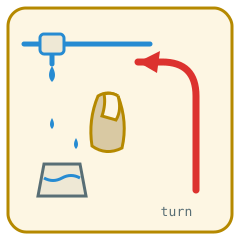
Argentum got the plainer version in 2019. "Your reputation online can be curated, but it has to be the truth." And the analogy I still reach for first: "Online reputation damage is like water damage. It'll seep through if you try to paper it over." Fix the leak or keep paying for paint. The paint bill, arriving monthly, is the law of diminishing returns with an invoice attached.
The word caught up in 2025
Here is the part I refuse to fudge: the philosophy is 2013, but the word metanoia in my reputation writing is new. Its first appearance in print is my July 2025 essay for The Chris Abraham Show, "Il n'y a pas de hors-texte", on the point that a constructed front only holds if the client becomes it: "you have to become the duck you asked me to build. The smartest do. That's not deconstruction anymore—that's metanoia. Transformation." I will not backdate the vocabulary. The doctrine is old; the word is a recent arrival, and the record should say both.
It was already in this weblog's record
On October 17 of this year I dictated the notes for "Google Abhors a Vacuum" and said the doctrine whole: a client who does not do metanoia and turn his life around is "going to have to write bigger and bigger checks to me," the effort grows until "it will be exponential and it will still be impossible," and a saved reputation is "your invitation to pivot to your second act," repent and sin no more. The published essay was revised the same day and my testimony came out of the body; the dictation stayed in the post's own prompt record, printed on the page for anyone to read. So the thought has sat on chrisabraham.net for a month, in the metadata, since before I started asking AI systems about my own theory. This post moves it into the body, where a doctrine belongs.
A laboratory note, because showing the work is the house style here: this week the desk checked a shelf of AI accounts of my ORM theory against my published record, line by line. The machines had the record mostly right and decorated it anyway, with ornaments I never wrote and one tidy aphorism I wish I had coined. The quotations above are the part I can prove: 2013 for the doctrine and the coinage, 2019 for the truth constraint and the water damage, 2025 for the word, October 2026 for the full statement in my own voice. Everything beyond that is weather.
So here is the doctrine in one place at last. If the story about you is false, hire the technician, write the check, and the job ends. If the story is true, the technician can hold the front for a while, and each month of holding costs more and buys less, and the only exit is the one that was on the table in 2013: get your own house in order, make the amends that are yours to make, and become the person the record describes. Metanoia first. Then the reputation work stops being rent and starts being a record.