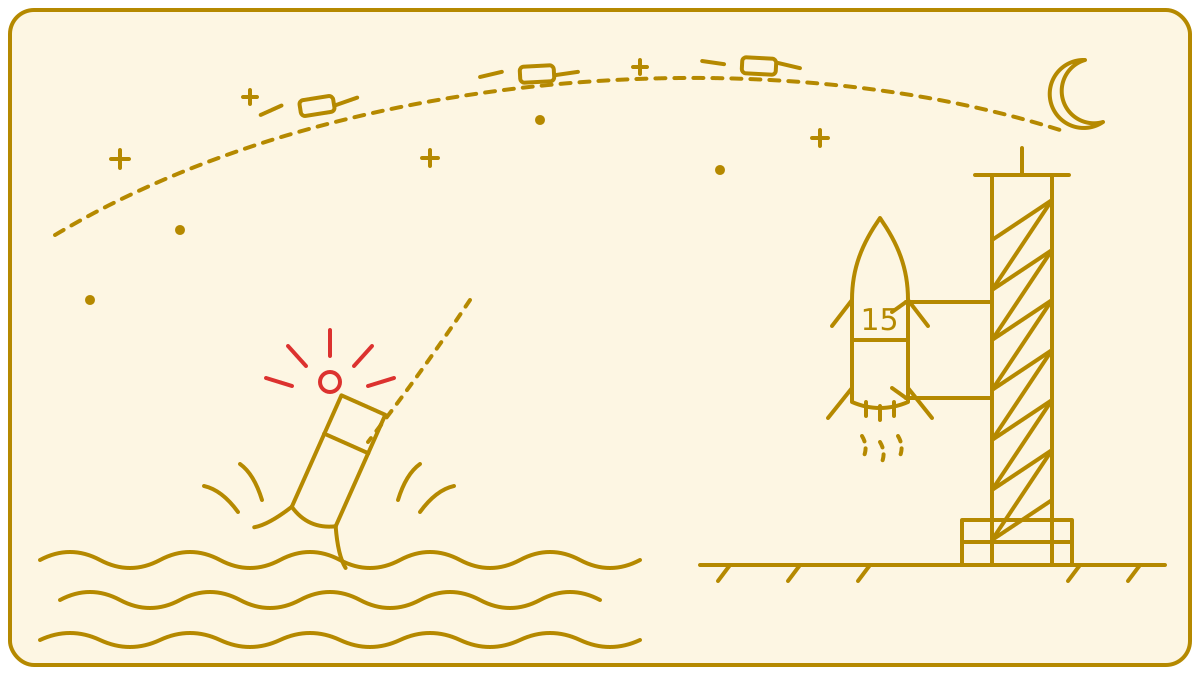
SpaceX flew Starship for the fifteenth time on Friday, and on Saturday afternoon the ship came home. Ship 42 lifted off from Starbase, Texas, at 5:47 p.m. Eastern on November 13, reached orbit, deployed 26 Starlink satellites, circled the Earth for some 22 and a half hours, reentered over Mexico, and was caught in midair by the launch tower's chopstick arms, the first time a Starship upper stage has ever been recovered. The Super Heavy booster never made it back. Its return burn ended early minutes after launch, the tower catch was called off, and the booster was destroyed over the Gulf of Mexico. Flight 15 aimed at the double catch, both stages home on a single flight. It got the harder half.
The running record sits in Florida Today's coverage for USA Today, SpaceX catches Starship for first time in Texas, making space history, with the Associated Press and Reuters filing as the flight unfolded.
What happened, stage by stage
Flight 15 was the fourth flight of the 407-foot Version 3 design: Ship 42 riding Super Heavy Booster 22, the FAA license issued only hours before liftoff. The booster lit its 33 Raptor engines and flew a clean ascent. After stage separation it flipped for the boostback burn that would have carried it home to the tower, and the burn ended early. SpaceX commentator Dan Huot said the booster detected a guidance, navigation and control problem and diverted itself offshore; commentator Kate Tice reported an apparent low fuel mass alarm, and Musk's first read on X was a booster running low on fuel, with the telemetry review still to come. The booster descended over the Gulf, hovered, cut its engines, and its flight termination system fired as it reached the water. A catch would have been the first Version 3 booster recovery, and the first booster catch since Flight 8 in March 2025.
The ship's flight was the clean one. Ship 42 reached orbit at 6:13 p.m., only the second fully orbital Starship mission; Flight 14 did it first in September. The ship deployed 26 Starlink V3 satellites, then settled in at about 170 miles up for some 14 orbits. On Saturday it fired its deorbit burn, reentered over Mexico, swung out across the Gulf, flipped, lit its engines, and slid sideways into the tower's arms at Starbase. SpaceX announced the result in four words: "Mechazilla catches Starship!" Musk added his congratulations to the team, and launch vice president Kiko Dontchev posted, "We did it!!!!!!"
What Flight 15 proved, and what it did not
The firsts are genuine. First catch of a ship, on the first attempt. First return of an orbital spacecraft to its own launch tower. Longest Starship flight by an order of magnitude, 22 and a half hours against the roughly one-hour profiles of the earlier tests. A working payload deployment on a second straight flight. Set against that: the double catch stays unproven, the Version 3 booster has now flown four times without a recovery, and no caught ship has been flown a second time. Full reusability, the prize SpaceX itself calls the holy grail of rocketry, requires both stages home on the same day and then requires them to fly again, and neither half of that sentence has happened yet.
Musk waved off the lost booster on X: "These early ships and boosters are already outdated by improved designs in production or on the test stand, so this booster loss does not change our timeline to reach high volume, fully reusable Starship flights." That is the company's standing answer to a destroyed vehicle, and the program's history mostly supports the shrug. Starship develops in public, in fireballs, and the next airframe is always already different.
Why does the ship catch matter more than the booster catch?
Boosters have been caught three times, and a booster never leaves the neighborhood. The ship is the vehicle. It carries the payload to orbit, it is the airframe NASA is counting on as the Artemis lunar lander, and until Saturday every ship that reached space ended its flight in an ocean or in pieces. A caught ship changes the arithmetic of the whole system: the expensive, engine-bearing, heat-shielded half of the rocket comes back to the pad it left, ready to fly again. That is the difference between a very large expendable rocket with a reusable first stage and an actual transportation system. SpaceX is finalizing Pad 39A in Florida, building two more pads at Cape Canaveral, and Musk talks about a weekly cadence by the first half of 2027. None of that cadence exists without ships that come home.
So the record of Flight 15 stands as follows. Fifteenth flight of Starship, fourth of Version 3. Orbit for the second time, 26 satellites delivered, and a ship caught at the tower for the first time in history after 22 and a half hours in space. One booster on the bottom of the Gulf, cause still under review, first read a fuel shortage at the return burn. The double catch waits for a later flight. The ship, for the first time, is home.