This morning I ran the vainest search a man can run, which in my line of work is also a professional obligation: I asked Google, “what does chris abraham think about private eyes tv show.” Google’s AI Overview did not speculate about my opinion. It quoted it, nearly word for word, from the show notes of my own podcast:
“I came for Jason Priestley and detective stories. I stayed for the patience, apologies, father-daughter relationships, and examples of people bringing the temperature down when somebody behaves badly.”
That is from “Broken Windows, Missing Wheels,” season 11, episode 3 of The Chris Abraham Show, and the answer engine sourced it from that episode’s page on my own show site. Underneath the AI answer, the top organic result for the same query was my October 13 essay, “What Private Eyes Is Teaching Me About Pride and Going Back.” So the machine’s authority on what Chris Abraham thinks is Chris Abraham. That is not because Google has taken a shine to me. It is because of where my words live, and how many places they live at once.
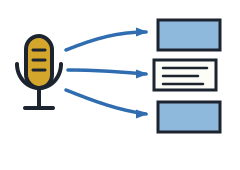
Here is the mechanism, and it is the whole post. The quoted passage is show notes. I wrote it once, in the feed of one podcast episode. That feed is the single source, and the podcast ecosystem is a copying machine: the identical notes sit word for word on Apple Podcasts and on Podcast Addict, and the same text runs through the hundreds of podcast indexes and directories that republish every feed they carry. Each copy is a page on a domain the search engines and answer engines already trust, and each copy carries my names, my links, and my phrasing exactly as I wrote them. Write once, and the ecosystem photocopies you onto trusted paper all over the internet. I am calling it the show-notes cascade. Yesterday I wrote here that you don’t write your own citation anymore, that you earn the citation and the machine writes its caption. Show notes are the standing exception: this is the one surface where you still write the caption yourself, in advance, hundreds of times.
Which is why I have stopped thinking of podcasting as content and started treating it as an investment, in the plain SEO, AEO, and GEO sense of the word. An episode costs me production time exactly once. The notes, the transcript, and the episode page keep working afterward, and they do not stop: a feed entry replicated across hundreds of indexes is about as close to permanent as anything on the internet gets. Ads evaporate when the budget does. Social posts sink by Friday. The back catalog compounds—season 11 means eleven seasons of deposits, every episode another set of citable surfaces with my name spelled my way. A podcast run this way is not a show with a marketing benefit. It is a citation factory that runs on conversations I would have had anyway.
The cascade only pays if the notes are written for citation, so here are the rules I now write by. Full entity names, spelled the way I want them repeated: Jason Priestley, Private Eyes, The Chris Abraham Show. Canonical links to my own pages, so the copies point home. And opinions phrased the way I would want them quoted, because they will be—the answer above is my sentence, not a summary of my sentence. Last rule: own the mirror. Platform notes truncate at roughly 4,000 characters, so the full notes, the transcripts, and an llms.txt live on thechrisabrahamshow.com, a site I control, where nothing gets cut and nothing disappears in somebody else’s policy change. The cascade rents reach. The mirror owns the record.
Calibrate, because a case study with a sample of one deserves it: the subject was me, the query was my name, and nobody should buy a microphone on the strength of my Saturday morning. But “what does X think about Y” is precisely the class of question the answer engines now field about founders, firms, and products all day, and the engines answer from whatever citable text exists. If the text does not exist, they find somebody else’s. The cascade is how you make sure the text exists, says what you said, and is sitting on a few hundred trusted domains when the question gets asked.
So today I ran the experiment forward. This morning I published a follow-up essay, “Still Learning from Matt Shade,” returning to Private Eyes at season 3, episode 1. The AI answer I captured this morning cannot know it exists yet. The open question, left open on purpose: how long before the answer absorbs it, and when it does, does the answer change? I will check, and I will report back either way. In the meantime the deposit is made, which is the entire strategy in one move. Keep depositing.
If you want the working version rather than the case study, the full how-to lives in the guide: “The show notes cascade: podcasting as an AI search strategy” walks through writing notes that cascade, step by step. And if you run a business rather than a podcast, the companion at Gerris Corp, “Podcasting as an investment in being found by AI search,” makes the business case: what the cascade costs, what it returns, and why it is an investment and not a marketing expense.
Update, October 24, 2026, 12:29 PM: Added a closing paragraph linking the two companion pieces published the same morning: the full guide on christopherabraham.com and the business case on gerriscorp.com. The post originally shipped without them because the guides were not live yet.