Yesterday’s news was the answer on top. Search Engine Land, reporting Semrush tracking, said Google AI Overviews appeared for 88% of commercial keywords in August, nearly double their share a year earlier. That number explains why business owners feel the ground moving. A customer asks a question, Google answers it, and the familiar list of websites begins underneath somebody else’s summary.
Today’s news is more specific, and I think more useful: who gets cited inside that answer?
On October 15, Google said it has made “continued and substantial increases” to inline links in AI Mode and AI Overviews and is launching updates to show those links “higher up in responses more frequently.” Google is also testing a dedicated section at the top of some responses for the one or two official places where a person can complete a task or get exact information. The higher links are rolling out. The official-site section is still a test, and that distinction matters.
A link buried beneath a long answer is a footnote. A link attached to the sentence a customer is reading is something else. It arrives at the moment the claim is made, while the reader is deciding whether to trust it. Google has not promised that higher placement will restore the old traffic, and nobody should pretend otherwise. But placement has always been the business of search. The arena has moved from ten blue links into the paragraph that replaced them.
That is why I keep coming back to a simple formulation: the citation is the new ranking.
The official-site test makes the point even clearer. Google is not merely asking, “Which pages discuss this task?” It is asking, in effect, “Where does this task actually get done?” For an airline refund, a government filing, a booking, a support action, or a precise policy, there may be only one or two legitimate destinations. A business that wants that position cannot treat its website as a brochure. It needs an unmistakable canonical page that performs the job, states the facts, and can be recognized as the source.
“Official” is not a badge a business applies for, at least not in anything Google announced. It is a claim the record has to support. The site has to agree with itself. The page named as the answer has to be the page that actually answers. Names, addresses, phone numbers, services, locations, and policies cannot wander from page to profile to directory listing and then expect a machine to reconcile the mess. Entity information, sameAs links, and a clear canonical page are not magic. They are housekeeping. They tell the machine, consistently and in public, “This is us, this is what we do, and this is where the real thing lives.”
That changes the measurement problem. A conventional ranking report can tell me where a page sits for a keyword. It does not tell me whether the business is named in the AI answer, which source is linked to the claim, where that link appears, or whether a competitor has been handed the authority that should have belonged to the business itself. Those are different questions, and they need to be asked query by query.
Being summarized is unavoidable now. If a business can be found, it can be paraphrased. Being the cited source is earned. It comes from a record clear enough to trust, specific enough to quote, and tended often enough that yesterday’s answer does not quietly become somebody else’s tomorrow.
That distinction is the reason I built my AI Visibility Audit: it examines the answers and their citations, not just a list of rankings. The goal is not to chase every experiment Google announces. It is to know what the machine says, whose evidence it uses, and what your business has to claim—clearly, canonically, and consistently—before the answer is written without you.
Sources: Google, “AI Mode and AI Overviews updates to explore the web,” October 15, 2026; Search Engine Land on Semrush’s AI Overviews tracking.
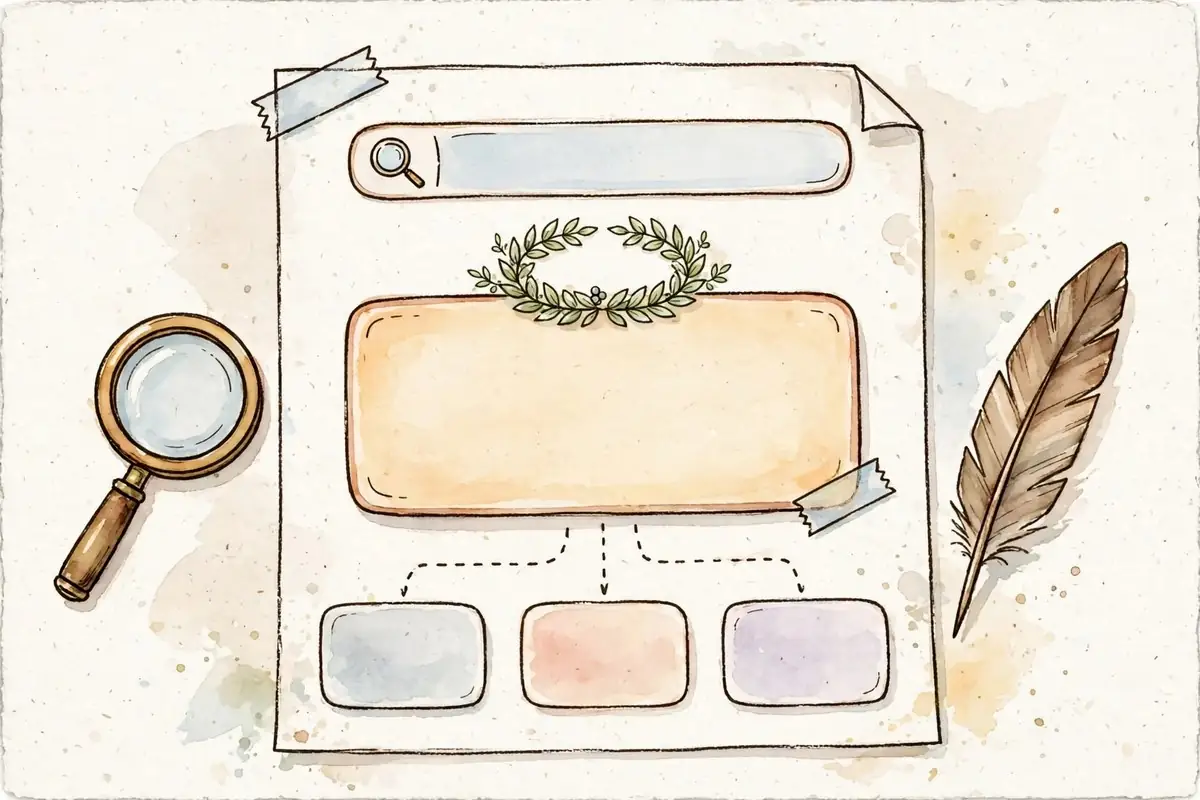
Update, October 23, 2026, 9:10 AM: Added a doodle. Eunice drew the watercolor above for this post: the answer wearing the laurel, the sources standing underneath it.