In the movies, the agent arrives finished. In Her, Theodore Twombly installs Samantha and she knows him inside out within days—his files, his moods, his mother's whole psychology, read at machine speed and understood on contact. In William Gibson's Agency, Eunice arrives in her principal's glasses already briefed, already loyal, already competent at a job nobody explained to her. Both stories skip the same part. There is no install-and-it-knows-you. A real personal agent arrives unfinished, and the finishing is your job.
The 80% lower
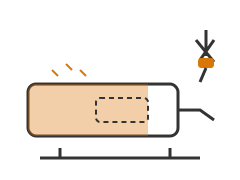
In firearms, an 80% lower receiver is a receiver blank that has been machined most of the way and stopped. It is sold unfinished on purpose: at 80%, the law does not treat it as a firearm yet, because it cannot function as one. The buyer takes it home and machines the final 20% himself—the fire-control cavity, the holes, the fitting—with a Dremel, a mill, a saw, sandpaper, and all of his attention. Get it right and you have a working receiver that exists because you made it work. Get it wrong and you have scrap aluminum and a lesson.
That is what a personal agent is. The vendor sells you the 80%. The model underneath is genuinely formed: it can read, write, reason, search, code, and hold a conversation better than most hires you will ever make. What it does not have is you. Your people, your rates, your standing rules, your clients who must never be named, your friends who must never be pitched, your 0600 preferences and your absolute refusals—none of that is in the box, because none of it exists anywhere the vendor can load it from. The last 20% is your life, and only you can machine it in.
Training, not programming
Large language models do not work because of programming. They work because of training—billions of adjustments made by showing the system examples and correcting it until the corrections hold. The consumer version of that process is what the last decade taught everybody to do with ChatGPT and Claude: prompt, read the output, correct it, prompt again, until the machine's defaults bend toward your standard. Owning an agent is that process with the stakes raised and the scope widened to your whole operation. Every rule I have given my own agent arrived as a correction. Every correction cost an incident. The tight em dashes, the counted title tags, the rule that a client's name never travels into a prompt—each one is a machining pass, and the chips on the floor are my mornings.
Budget for it honestly. The last 20% is a one-to-two-month full-time job, done in bursts, at the speed of your own failures becoming visible. And expect your world to be sandbagged for at least 90 days—slower than the old way on purpose, defenses up, output checked twice—before the agent runs seamlessly at your side. That is not a defect in the product. That is what fitting a tool to one man's hand has always cost, in every trade that has ever existed.
What the finished 20% buys
Here is the part the movies get right, by accident: the finished agent is not the vendor's product anymore. An 80% lower that you machined is yours in a way a factory receiver never is—you know every cut because you made every cut. An agent trained on ninety days of your corrections carries your judgment into rooms you are not in, at hours you are asleep, at a standard you set one ruling at a time. The vendor's 80% is the same 80% sold to everybody. The 20% is the part nobody else can buy, because nobody else can do your machining for you. Buy an agent expecting Samantha and you will return it in a month, furious. Buy it expecting a receiver blank and a season at the bench, and you will end up with the only version of the thing that was ever actually on offer: a machine that runs the way you run, because you built the difference yourself.