I learned the word NIMBY in Washington in 1993 or 1994, and I learned it the way you learn most of the useful vocabulary of American life, across a kitchen table, from somebody who worked closer to the machinery than I did. I was an American literature major fresh out of college. A girlfriend from my post-college years had gone to Clark University for environmental studies, and the summer I met her she was working in DC at Population Action International, an outfit in the population and reproductive-health world. We talked for hours, the way you do at that age, about women's rights and about the environment, and the word that kept surfacing in those conversations was NIMBY. Not in my backyard. It was in the air in Washington then. Everybody used it. Almost nobody stopped to take it apart.
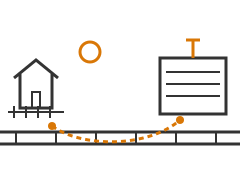
Here is the word taken apart. NIMBY is the demand that a necessary thing exist somewhere else. The landfill, the shelter, the power plant, the refinery, the data center: build it, run it, send me what it makes, and put it on the other side of the tracks. The other side of the tracks is not a metaphor in this country. It is an address. It is where the dumping has always happened, in the neighborhoods whose residents have the least practice at hiring lawyers and attending zoning hearings on a Tuesday night. Stated plainly, in the accent it deserves: let the poors do it. Do you know what kind of neighborhood this is?
The count
The word has work to do this year, because the data center has become the thing America wants everywhere and permits nowhere. I had heard the number forty-five attached to the legislative fights, and the record, when you go and count it, is bigger than the number I was handed. A moratorium tracker that reads primary sources jurisdiction by jurisdiction counts state-level action in 48 states, 259 state measures, and more than 1,200 city and county measures on top of those. MultiState counts more than 300 data center bills filed across more than 30 states in 2026 alone. Lawmakers in roughly 14 states have weighed outright bans or moratoria, per the National Conference of State Legislatures, and New York went first: an executive order in July paused large new data centers statewide for a year. More than 320 cities, towns, and counties have passed some form of moratorium of their own. Forty-five was the rumor. The record is a country.
And when the question went directly to voters, it stopped being close. I had a number in the mid-forties in my head for the ballot fights, and Ballotpedia's count of the November 3, 2026 elections is the authoritative version: 41 local measures in 10 states, and voters favored limiting data center development in 40 of the 41. They approved 27 measures that limited development or opposed it, and they defeated 13 measures that would have helped it. The single exception was Harwood, North Dakota, where voters rejected extra review requirements for big industrial projects. Add the measures decided earlier in 2026 and the year's score stands at 46 of 47 for the limits. A near-sweep, in the midterms, in the states where the buildings most want to go.
Read the measures closely and a pattern shows through the stated reasons. Water, noise, and the electric bill are real concerns, and they get their hearings. Underneath them sits the older arithmetic: the benefits of the building are national and the costs are local, so every jurisdiction with the power to refuse does the rational thing and refuses, and the building lands where refusal is weakest. That is the whole game. It has never been a secret. It just usually wears a suit and calls itself land use.
California shipped its refineries
California ran the experiment first with gasoline, and California is where the mechanism shows its bones. The state spent decades making refineries unwelcome, and the refineries took the hint. Phillips 66 closed its Wilmington refinery in October 2025, and Valero shut down fuel production at Benicia in the spring of 2026. Between them the two plants were 17 percent of the state's refining capacity. California drivers did not respond by driving 17 percent less. Demand stayed. Supply moved.
The replacement fuel arrives by tanker, three to six weeks out, from refineries in Asia that can make California's special blend. Federal energy analysts estimate that about 22 percent of the state's gasoline demand now has to be met by imports, against 3 to 7 percent in the old arrangement, and they warn that the shortfall cannot easily be filled from the big refining hubs elsewhere in the United States because the West Coast is barely connected to them. In Hawaii, everything that arrived by ship was a Matson, after the shipping line that carried it. California has Matsoned its gasoline. The refining still happens. The emissions still happen. They happen in somebody else's backyard, across an ocean, and the finished product comes in clean and squeaky on a ship.
The big version of the same trick is measured, not guessed. The Global Carbon Project keeps two sets of books: what a country emits inside its borders, and what its consumption causes anywhere on earth. America's consumption footprint runs about a tenth higher than its territorial count, roughly 5.4 billion tonnes against 4.9, and China runs the mirror image, emitting more than its own consumption explains because it manufactures for the rest of us. The sins happen in Asia. The goods arrive by boat. The bookkeeping at home looks wonderful.
You cannot Matson a millisecond
The data center breaks the trick, and it breaks it on physics. A refinery's product can ride a tanker for a month and lose nothing but time on a shelf. A data center's product is time. Its output travels at the speed of light in glass, and every mile of glass costs microseconds that somebody is paying to avoid. Ship the building to the far side of the Pacific and you have not moved the cost; you have deleted the product.
The traders learned this first, and they learned it in public. Within living memory a trader wanted to sit as close to Wall Street as a man could get, because the floor was the market and distance was money. Then the market moved into computers, and the computers moved across the river. The New York Stock Exchange's matching engines sit in Mahwah, New Jersey. Nasdaq's sit in Carteret. Cboe and a crowd of younger exchanges sit in and around Secaucus. The three towns form a triangle wired together with fiber and microwave links, and firms pay serious money to colocate inside the same buildings as the engines, feet from the matching, because a microsecond is a price. The most latency-obsessed industry on earth concluded that the building had to be near the work. There was no ship to load it onto.
What sites the building
So a data center gets sited by a short list of facts. Latency, because physics. Access to the grid, because a big facility drinks power like a small city. Cooling water, because the machines run hot. And then the human item on the list, the one that decides where on the map the first three get satisfied: permission.
I worked for an oil company once, and I remember the permitters. Their job was to travel, to sit with landowners in kitchens and in bars, and to come home with signatures: leases, easements, mineral rights, the paper that lets the work happen on somebody's ground. Every extractive industry keeps such people, because the resource is where it is and the welcome has to be manufactured locally. The data center business runs the same play with better catering. Site-selection consultants score counties on power, water, fiber, and tax abatements; land gets quietly assembled; incentives get negotiated; and the search, whatever the brochure says, ends where a community is hungry enough for the tax base to say yes. Hungry is doing the work in that sentence. The building goes where yes is cheap, and yes is cheap where money is scarce. NIMBY's other half has a name too, and the name is the welcome mat on the poor side of the tracks.
The view from the epicenter
I write this from inside the exception. Northern Virginia, where I live, is the largest data center market on earth, and it has been the center of this business since the first fiber exchanges went into office parks out by Dulles in the 1990s. Loudoun County's corridor, Ashburn and Sterling, is called Data Center Alley: roughly two hundred buildings, more going up, and a share of the world's internet traffic that county officials have put at a quarter and popular accounts put as high as 70 percent. Anyone who has ever opened a cloud console and picked a region knows the litany by heart. Northern Virginia, the original region, us-east-1. Ohio. Northern California. Oregon. Texas. Toronto. The picker is a map of where the welcome held.
The alley also pays, which is the part of the story the moratorium counties are declining. Data centers contribute close to half of Loudoun County's tax revenue, and the county has cut its property tax rate hard across the building boom; the buildings fund the place that hosts them. And still, in March 2025, Loudoun ended by-right approval for new data centers and moved every proposal into discretionary review. The epicenter itself caught the disease. Northern Virginia spent thirty years as the backyard that said yes, and then it looked around at what yes had built and started reaching for the same word I learned at a kitchen table in 1994.
Whose backyard, then
My own bet is that the clumping loosens. It already is loosening, the way telecom loosened: traffic distributes, regions multiply, computing spreads toward wherever power and permission can be found together, and the map in the cloud picker gets longer every year. Distribution does not repeal the arithmetic, though. Every region in that picker is somebody's backyard. Every building sits in a county that either chose it, sold it, or failed to stop it.
So the honest argument is not the one the hearings are having. The question was never whether America wants data centers; the streaming, the storage, the chatbots, and the trading engines answer that one daily, at scale, in the affirmative. The question is whose backyard hosts them and what that backyard gets paid, in tax base, in rates, in say. NIMBY, the word from my kitchen-table education, names the dodge: everything it offers, somewhere else. Thirty years on, the dodge has a legislative record in 48 states and a tanker schedule off the California coast. The buildings will go somewhere. They always do. The only choice on the table is whether the somewhere is chosen in the open, at a fair price, or assigned the old way, by weakness, to the other side of the tracks.