I have been calling Basecamp 5 Human GitHub. I told Merissa at Basecamp support that it could be GitHum. Then I thought HumGit, like HUMINT. I have apparently found another way to spend an afternoon naming something instead of doing the work it is supposed to help me do.
But I mean it. I have used Basecamp since 2007. Today I finally moved into Basecamp 5, brought a couple of AIs through the door, and started filling the place with my working life. Client notes, emails, Upwork conversations, attachments, things I promised, things the client actually asked for, and the rather important differences between those last two.
I upgraded to twelve projects. At one point ChatGPT told me we had six. I thought there might be seven. It checked. Seven. Eunice had been working while we were working. Already the office has people moving furniture without everyone else having to be present.
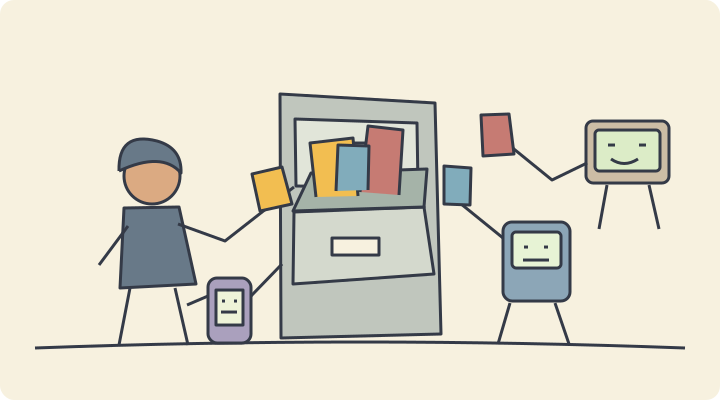
Basecamp is my rock
This is an old relationship. Back in the Abraham Harrison days, when we were doing digital PR, blogger outreach, and influencer campaigns with a distributed team, Basecamp was where the work could live without everyone living in the same room. My business has changed. The need to find the conversation has been remarkably consistent.
I went back to my old article, My influencer marketing tools of the trade. There I am, writing that I started in 2007, had a Basecamp mutiny, tried Asana and Trello and other things, and kept coming back. I called it my rock. I also pointed out that anyone who hated the interface could participate through email.
That remains a very good feature. You can devise a beautiful system, complete with a lovely diagram and several colors of arrow, and then spend the rest of your life persuading people to use it. Or they can reply to an email. I have clients. I do not need a second career running compulsory software appreciation classes.
I settled into Basecamp 2 and stayed. If something holds my projects, my clients understand it, and I can find the history, I don't feel a pressing obligation to replace it because somebody has moved the buttons and put a new number on the box. I am writing this as a man who still likes old ThinkPads and terminal email. My commitment to novelty has always been selective.
There is even a Basecamp customer testimonial under my name, Gerris Corp: “Fewer things fall through the cracks or get lost.” That is mine. Short. Entirely believable. No claim that software had transformed me into a flawless Swiss railway.
I asked several AIs to tell me the history of Chris Abraham and Basecamp. Some of them supplied an impressive little corporate biography. Early champion. Prominent case study. International this and foundational that. One answer gave me somebody else's grapevine testimonial. The actual page puts Karen Adams' grapevine immediately after my cracks. The machine wandered into the next garden and brought back the flowers.
Another answer was so determined to establish that I had never been a Basecamp employee or investor that it practically issued a denial on my behalf. I asked about a relationship with a piece of software. I wasn't claiming to be the secret fifth Beatle of 37signals.
The useful evidence is less glamorous. My own old writing says 2007. The customer page has my actual sentence. My inbox contains the ongoing relationship. Those are enough. I don't need a robot to award me an honorary chair in the history of project management.
Why I finally moved
In October I started talking to Basecamp about moving from 2 to 5. Merissa wrote that Jason had sent my email her way. She gave me the migration instructions and pointed me toward their AI and agent tools.
I hesitated. I had years of projects in BC2. I had a legacy arrangement. I didn't want to pay more money just to turn a familiar room into a less familiar room, and I certainly didn't want to shovel almost two decades of work into a new account in one exhausted afternoon.
Merissa explained that I could choose which projects to migrate. More importantly, I can keep my Basecamp 2 account indefinitely, at no extra cost, as long as I maintain a paid Basecamp 5 account. I won't be adding new projects to BC2; the old work can remain there while the active work moves over. Their migration guidance explains the path. There was the answer. Keep the old house standing. Move the active work. No ceremonial bonfire of the filing cabinets.
I will probably keep paying for BC5 for another twenty years, Inshallah. By then I will be seventy-six, the ThinkPads will be museum pieces, and I will presumably still be explaining why I haven't moved to the newest version.
Then, because timing is a comedian with a grudge, the pricing changed while I was getting around to signing up. I emailed to ask whether the plan really had just changed. Merissa said it had, about an hour earlier, and offered to help with the earlier arrangement from her end. I asked pretty please. More than once. I am not too proud to say pretty please over a recurring bill.
By the end of the day I had upgraded to twelve projects anyway. I was still sorting out the billing conversation, including the BC2 payment that had just gone through. An offer to help is not the same as a credit already applied, so I am leaving that part of the story where it actually stands.
What mattered was getting in. I told Merissa I was going to bring my own AI agents.
Basecamp now has connections for AI assistants and tools for coding agents. There is an MCP address, an official command-line interface, and an API. In plain English, the assistants I already use can work with my Basecamp projects. I don't have to abandon them for the mascot built into somebody else's productivity suite.
That was a sufficient reason to leave a version I had been perfectly capable of continuing to use.
The office needs somewhere to remember
I use ChatGPT. I use Claude. I use Claude Code and OpenAI Codex. I have my little terminal agent, bb, and its public spin-off, Adjutant. And now I use Muse, whom I call Eunice after the AI in William Gibson's Agency, in the world of The Peripheral (Amazon affiliate link). I sometimes collapse the books into one another when I am talking. Eunice is from Agency. There. The record has been corrected before the literary police arrive.
Eunice is the one in my pocket, the one I am asking to help run the day. The coding agents can get into a repository and build or fix something. ChatGPT can read a pile of correspondence and help me work out what it means. They have overlapping abilities, different access, and different bits of context. I don't need to pretend they are one continuous intelligence wearing different hats.
What I do need is somewhere they can leave the work.
Otherwise I become the integration. I copy the email into one conversation, explain the background to another, carry a decision into a third, and then try to remember which assistant knows the thing I told the other assistant. I have hired a collection of tireless helpers and somehow made myself the man running between their desks with carbon paper.
I have ADHD, aphantasia, and severely deficient autobiographical memory. I can work out a difficult problem. Expecting me to retain every promise and every turn in a month-long client conversation is a different job. My solution cannot depend on becoming a different person with a better filing cabinet in his head.
There is a practical humiliation in asking a machine to read your own correspondence and explain what you agreed to. There is also relief. I will take the relief.
Today I had ChatGPT collect the emails and Upwork histories for two clients and put them into their respective Basecamp projects. It retained the conversations, copied the retrievable attachments, and wrote an index and a current-context note for each. The calendar attachment it couldn't retrieve got listed as an exception. An original message, an interpretation, and an unfinished job are three different things. I want to be able to tell them apart.
The exercise immediately earned its keep. A client's latest response changed the sequence in an earlier plan. He wanted useful fixes and catalog work sooner, rather than a leisurely procession through auditing and rebuilding. If all we had saved was the beautiful plan, we would have preserved the wrong current understanding. The correction needed to sit where the next person would actually see it.
I am keeping the clients' words in their projects. You do not need their private correspondence to understand why this matters. Whoever picks up the work next needs the source, the current decision, and the unresolved question.
GitHub, for anyone who has sensibly avoided learning what GitHub is
GitHub is a place to keep a project's files and work on them together, with a record of how they changed. Underneath it is Git, the version-control system. A repository, or repo, is the project folder plus its history. A commit is a recorded set of changes. A branch lets someone work on a variation without immediately changing the main version. A pull request puts that proposed change in front of us to inspect and discuss before merging it. You do not need to memorize those words to understand the appeal: show me what you changed before you replace the thing that was working.
This actual website lives in my public weblog repository. Articles are source files with the title, date, model, prompt, and HTML. The pictures and stylesheet are files too. A Python builder turns them into the pages you read, along with the archives, feeds, and sitemap. Automated GitHub Actions check the result, and GitHub Pages serves the generated site at chrisabraham.net. The early-web look is intentional. The plumbing is quite current.
Claude Code and Codex can read a checkout of that repository, edit files, run the builder and checks, and leave commits and handover notes. ChatGPT can reach the repository through its connected GitHub tools; that is another route to reading files, proposing changes, and recording the work. Muse, Eunice, has already contributed through her own connected workflow. Claude can use an authorized GitHub connection too. Different tools, different doors, same set of project files. Access comes from the connections and permissions I give each tool, not from all the models secretly sharing a brain.
The visible result is already on this site: work from Claude Code, Codex, ChatGPT, and Eunice, with their contributions attributed. The source and history let the next one see what the previous one actually left behind. Nobody has to rely on my remembering which robot wrote which paragraph before breakfast.
Human GitHub
GitHub has made this very obvious to me. When Claude Code or Codex works on a website, there can be a repository containing the source, a history of changes, an issue explaining the problem, a proposed change I can inspect, and checks showing whether the thing builds. A future session can read what happened. It doesn't have to conjure a memory of being there.
This weblog is an example. The prompt, the model, the source, the edits, and the handover notes belong to the work. An agent can disagree with an earlier agent without silently erasing what the earlier one said. I rather like that. I contain multitudes, and the multitudes ought to leave a decent paper trail.
Most of my business is not source code. A client approves copy. Another changes the priority. Someone sends a photograph. A developer explains a limitation. An agency contact has two or three clients under the same relationship. That still needs a home a person can read.
So I am building the Basecamp projects around how I actually work. If one agency contact brings me several accounts, the project can belong to that relationship, with distinct notes for each client underneath. A direct client gets a direct project. Upwork has its own space. I don't need to turn every small monthly engagement into a departmental headquarters.
And I don't need to make a mess just to save a project slot. I told ChatGPT that anything is cheaper than bricks and mortar. I mean that literally as a business comparison. I am willing to pay for an office that is useful. I don't want my filing system dictated by the price of one more imaginary room.
Human GitHub is my name for the arrangement, not a claim that Basecamp is Git. There are no automatic branches of a client conversation, no magical merge protection when two assistants edit the same note, and no reason to assume a confident summary has preserved every qualification in an email.
The discipline still has to be supplied. Read before starting. Say what you are working on. Leave the source where it can be checked. Record what changed, what was tested, and what still needs doing. If the client changes his mind, date the change. If another assistant has already done the job, don't perform it again for the pleasure of announcing completion.
That applies to me too. The human is not exempt from leaving notes in Human GitHub.
Now I am giving the business side the same arrangement in Basecamp 5. The GitHub repository holds the website's source and its development history. BC5 holds the client brief, correspondence, files, decisions, and work to do. Eunice and ChatGPT are already working in the Basecamp account. Claude, Claude Code, and Codex can come through Basecamp's assistant connections or its command-line and agent tools as I finish onboarding them. Each reads the same project record instead of asking me to recreate it in a fresh conversation.
That does not automatically give Basecamp Git's branches or merge checks, and it does not mean every assistant has already been connected. It gives us a shared place to read, contribute, and leave a handover. GitHub for the website; Human GitHub for the work around it. I am not announcing the fully autonomous company on the strength of a successful login.
But I can see what the office is becoming. I can get up, switch computers, run out of credits with one model, pick up another, or go to bed, and the work has somewhere to remain. The next collaborator can read the room before speaking.
Nearly nineteen years ago I needed distributed people to be able to work together without sharing an office. Now some of my collaborators are software, and I need them to work together without sharing a mind.
I am still the client-facing human. I still decide, approve, earn the money, and answer when something goes wrong. I would simply like to stop being the only place where the whole story is supposed to fit.
Basecamp was my rock when the team was people. I have brought a few peculiar new colleagues. The rock appears willing to accommodate them.
Human GitHub. GitHum. HumGit.
I'll settle the name later. We have work to do.
Writing and source note: Written by OpenAI Codex as Chris Abraham, at his request, from his conversation, his October 2026 Basecamp support correspondence, his earlier published account of using Basecamp, and the public sources linked above. The model checked the original testimonial rather than repeating the attribution in the supplied AI summaries. Private client names, correspondence, project URLs, billing identifiers, and media links have been omitted. Support correspondence establishes the offers and requests described here; it does not establish that every requested billing adjustment has been applied. The prompt box preserves Chris' direct writing instruction and naming aside; he also supplied research responses from Google AI, Grok, Gemini, and Copilot, which were treated as leads to check, not sources of established fact.
Update, October 20, 2026, 6:58 PM Eastern: At my request, OpenAI Codex added prominent Basecamp links, a plain-English explanation of GitHub and this site's repository, build, publishing, and AI collaboration workflow, and the parallel arrangement in BC5. I also clarified that I can retain BC2 indefinitely while maintaining a paid BC5 account, and added my intention to stay for another twenty years, Inshallah. The original publication remains in Git history, and my follow-up instruction is appended to the prompt.
Update, October 20, 2026, 7:10 PM Eastern: At my request, Codex linked The Peripheral to Amazon with my gerris-20 affiliate tag. As an Amazon Associate I earn from qualifying purchases.
Update, October 20, 2026: At my request, Codex also added an Amazon affiliate link for Agency, using my gerris-20 tag.
As an Amazon Associate I earn from qualifying purchases. About affiliate links