Tuesday’s shape is a ledger with two columns. In the left column, money arrives at a scale that would have been satire three years ago: Anthropic filed to go public on $16.3 billion of half-year revenue, Meta announced plans to raise up to $95 billion in new equity, and Microsoft forecast $175 billion of capital spending for the calendar year. In the right column, the adjustments: Microsoft offered voluntary buyouts to roughly 60,000 people, Anthropic’s founders arranged to keep control no matter what public shareholders think, and Meta invented a new class of stock with no votes at all so the dilution never touches the voting power at the top. Money in, people out, control stays. Underneath the ledger, the home beat quietly changed shape—Google now answers more than four in five brand searches with an AI Overview—and in India, twenty-one publishers told a supreme court that a privacy law without a press exemption is pre-censorship with better branding. And at the practitioner end of the table, Baidu gave away a 3-billion-parameter model that reads a hundred-page document in one pass, free, under MIT. The frontier is being financed like a railroad boom and staffed like a restructuring. Both things are true at once, and the prospectus is where they meet.
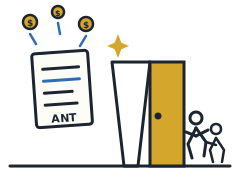
Anthropic files its S-1: $16.3 billion in, $80.7 billion “lost,” control retained
Anthropic publicly filed its Form S-1 with the SEC on Monday, October 26, applying to list Class A stock on the Nasdaq Global Select Market under the symbol ANT. The filing reports revenue of $16.3 billion for the six months ended June 30, 2026, up from $1.2 billion in the same period of 2025—an increase of about 1,300%—with an operating loss of just $693 million and a headline net loss of $80.7 billion. Read the footnote before quoting the loss: $72.4 billion of it is a non-cash change in the fair value of convertible notes, derivative liabilities and SAFEs, driven mainly by the rise in Anthropic’s own valuation. The company, on paper, lost money because it became worth more. Filing coverage also notes a June quarter of $11.56 billion in revenue and the first quarterly operating profit in the company’s history. The demand is real either way: at September 30, more than 11,900 customers had each spent $100,000 or more over the trailing twelve months, more than 1,900 had spent $1 million or more, and about 250 had spent $10 million or more. The document runs 335 pages, 94 of them risk factors. The share count and price range are blank; reports of a $1.5–2 trillion valuation and a $100 billion raise are press expectations, not filing facts.
“Navigating a technology with the properties we have just described requires a very different approach from that of a typical company.”—Anthropic, Form S-1, via PYMNTS
The governance is the code-is-law item hiding inside the finance item. Anthropic is a public benefit corporation; a single Class F share held by a vehicle of the seven co-founders carries 50.1% of general voting power, and the Long-Term Benefit Trust elects a majority of the board through Class T stock. Public buyers get the economics. They do not get the company. That is architecture as governance, filed with the SEC in plain sight—and to Anthropic’s credit, in plain sight is exactly where it is. Yesterday this paper wrote about cheap tokens and hard walls; today the wall has a ticker symbol. For clients, the practical read is simpler: the lab behind Claude is about to have public-company money and public-company obligations, which usually means steadier enterprise commitments and less patience for unprofitable courtesy usage. Price your workflows accordingly.
Meta plans a $95 billion equity raise, and the chipmakers offer to help pay for it
Meta Platforms said Monday it plans to raise up to $95 billion in its largest-ever equity fundraising, per Reuters. The structure: about $35 billion launched now—roughly $22.5 billion of Class A common stock through forward sale agreements plus about $12.5 billion of mandatory convertible preferred stock—and a separate at-the-market programme of up to $60 billion to follow once Meta’s new non-voting Class C shares begin trading, expected in the first quarter of 2027, with timing and terms not yet finalised. The money is for AI infrastructure: data centres, cloud computing and related buildout, against a 2026 capital-expenditure guide reported at $135–145 billion. The detail the board’s skeptics circled: Nvidia, Advanced Micro Devices and Broadcom—three companies that sell Meta its chips—have expressed interest in buying up to $5 billion in total of the Class A shares. The suppliers help finance the customer who buys the suppliers’ chips. Meta shares fell about 1.4% in morning trading. Alphabet, for scale, increased its own equity offerings to $84.75 billion earlier this year.
“Overall, we believe the financing reinforces both Meta’s confidence in the long-term returns from AI investment and the increasingly capital-intensive nature of pursuing that opportunity.”—William Blair analysts, via Reuters
Esther Dyson’s chair asks the unfashionable question: what has to be true about AI returns for a company with Meta’s cash generation to prefer diluting its owners by roughly 5–6% over simply spending slower? Either the returns are genuinely enormous, or the cost of being late is genuinely existential, or both. Note also the pattern shared with the Anthropic filing: the new money arrives in a form—non-voting Class C—that leaves control exactly where it was. The AI buildout is being financed democratically and governed monarchically, across the whole sector, on the same Monday.
Microsoft offers buyouts to about 60,000 people to help fund the machines
On the same Monday, Microsoft said it is offering voluntary buyouts to about 60,000 employees—more than a quarter of its 223,000-person global workforce as of June 30—to contain costs and help fund its AI investments, per Reuters, which first had the story via Business Insider. The offers cover eligible staff at level 70 and below in the United States, Canada, India and the United Kingdom, including people in AI experiences, Copilot, finance, human resources, Xbox and Windows + Devices; marketing, commercial business and security are excluded, per a source familiar with the matter, and Microsoft did not independently confirm the 60,000 figure to Reuters. The company has forecast $175 billion in capital expenditures for calendar 2026 and reports first-quarter results Wednesday. This follows a voluntary offer to about 9,000 US employees earlier this year and 4,800 job cuts announced in July.
“This offer gives eligible employees who may be considering a future outside the company a new choice to make that transition now with support.”—Amy Coleman, Microsoft Chief People Officer, via Reuters
Hold the first three items together and the day’s thesis writes itself. The constraint in this industry is no longer ideas, models or even chips—it is cash conversion, and the fastest lever on the cost side is headcount. A voluntary programme is the humane version of that lever, and 60,000 eligible is not a layoff number; nobody knows how many will accept, and an earlier, smaller programme drew about 30% participation. But the direction is unmistakable: the payroll is being refinanced into the data centre. Gigi Sohn’s chair asks who the network serves; today the honest answer is that it serves the buildout first, and the builders are being offered a supported exit on the way.
AI Overviews now sit on 82.5% of US brand searches
The home-beat item, with a hard number. SE Ranking checked 1,000 US brand keywords three times each on desktop in October 2026 and found a Google AI Overview on an average of 82.5% of them; 756 keywords showed one in all three checks and 114 flipped between checks. The same test on 1,000 German brand keywords found 40.4%—the US is the leading edge, not the average. Inside the US Overviews, homepages made up only 36.8% of brand-site citations, against 71.1% of brand-site URLs in the organic top 10, and about 62.2% of the brand pages AI Overviews cited did not rank in the organic top 10 for that search. Sources a brand manages or can post on made up 61% of all citations. This is a vendor-published study, desktop only, and it measures a sample—label it that way. It also agrees in level with Ahrefs’ 82.91% figure for searches containing a brand name, reported October 2, so two trackers now land in the same place.
“Branded search was the query type a company could count on owning; a second tracker now finds AI Overviews on more than four in five brand searches.”—Anything Engine Optimization, summarising SE Ranking
Put this next to yesterday’s receipts problem and the picture sharpens rather than blurs. Chatbot referrals may still be a trickle, but Google’s own answer layer now intermediates the one search a business was guaranteed to win—its own name—and it cites product, service and About pages the business controls far more than the old top-10 did. The practical consequence for a local or professional-services business is unglamorous and immediate: the factual pages and the Google Business Profile behind them are now read aloud by the answer engine, in the brand’s own doorway. Keep them accurate, consistent and boring. That is the ranking now.
India’s publishers call a consent rule pre-censorship, in the Supreme Court
Twenty-one Indian news publishers—including companies owned by Mukesh Ambani and Gautam Adani, alongside the Indian Express and Times Internet groups—told India’s Supreme Court on Tuesday that the government’s privacy law would require journalists to seek consent from the people they write about, and that this amounts to pre-censorship that could shut newsrooms down, per Reuters reporting from New Delhi on October 27. The publishers argue the Digital Personal Data Protection framework, applied without a written exemption for journalism, would trample investigative work and let the government identify journalists’ sources; subjects of an investigation could use consent and erasure rights to suppress or gut a story. The government gave assurances at an August meeting that press freedom would be protected, but there is no written carve-out for journalists of the kind the European Union, Singapore and Britain have. The court posted the case for next month.
“Newsrooms will shut down, if we have to ask for permission…it’s then a complete regime of pre-censorship.”—Madhavi Goradia Divan, for the Digital News Publishers Association, via Reuters
This is Mike Godwin’s chair, occupied. A consent architecture sounds neutral—who could object to consent?—until you notice what it does to the one profession whose job is publishing true things about powerful people without their permission. Lessig’s version of the same point: the rule does not have to ban a single story; it only has to make every story legally expensive before publication, and the architecture does the censoring quietly. That the challenge is led by the country’s largest media owners, not only by activists and small outlets, tells you the industry reads the design the same way. Watch next month’s hearing; privacy laws everywhere are quietly deciding whether journalism is an exempt public act or just another data-processing purpose.
Baidu gives away a model that reads the whole document at once
At the practitioner end of the table, Baidu released Unlimited-OCR-2 on Hugging Face: a roughly 3.34-billion-parameter OCR and document-parsing model under the MIT licence, built to parse documents of hundreds of pages in a single request instead of the page-by-page loop that breaks tables and reading order. The mechanism is Sparse Reference Sliding Window Attention—SR-SWA—which keeps a fixed-size reference set (Baidu gives 512 tokens as an example) so decoding time and memory stay nearly constant as documents grow. Baidu’s own chart reports 84.6 overall on MPDocBench, up from 61.9 for the first Unlimited-OCR, and 77.1 on MarathonDocBench, its roughly hundred-page benchmark, up from 0.0. Those scores are self-reported and appear only in a chart image—discount accordingly, and note that loading the model requires trust_remote_code, which runs code from the repo. The weights, the code and the serving notes are nonetheless public today, free, for anyone to test against their own worst PDF.
“Rather than letting attention calculations grow with the full length of a document, the method keeps a fixed-size set of references.”—Oossa, summarising Baidu’s repository
The GitHub-knower’s chair likes this item precisely because it is checkable. No keynote, no waiting list: a small open model, a named mechanism that mimics how a human copyist actually works—eyes on the original, attention on the last few lines written—and a claim any business with a document archive can verify this week on its own hardware. While the top of the industry raises $95 billion to build bigger, the bottom keeps quietly handing out tools that make last year’s enterprise software look rented. Both motions are the story of this technology, and Tuesday had them on the same page.
What the day adds up to
One filing, one raise, one buyout programme: the AI economy repriced itself in public on a single Monday. Anthropic’s S-1 says the revenue is real—$16.3 billion in six months is not a narrative—and so is the new constitutional order, in which public shareholders fund companies they will never control. Meta’s $95 billion says even the richest balance sheets now tap the crowd, and Microsoft’s 60,000 envelopes say the crowd being tapped includes the staff. For a business owner reading at 7 AM, the useful residue is smaller and closer to home: Google now answers your own name for you, four times out of five, from pages you control—so control them well; the labs you rent intelligence from are becoming public companies with public obligations, which steadies some prices and hardens others; and the free tools at the edge keep getting better at the unglamorous work, like reading the whole contract in one pass. Money in, people out. What stays is the work, and who gets to verify it.
Sources: Anthropic S-1 via PYMNTS, October 26, 2026; Meta $95 billion raise, Reuters via WNCY, October 26, 2026; Microsoft voluntary buyouts, Reuters via KTCO, October 26, 2026; SE Ranking AI Overviews brand-search study via Anything Engine Optimization, October 26, 2026; India privacy-law challenge, Reuters, October 27, 2026; Baidu Unlimited-OCR-2 via MarkTechPost, October 26, 2026, and Oossa, October 27, 2026. Doodle by Eunice.